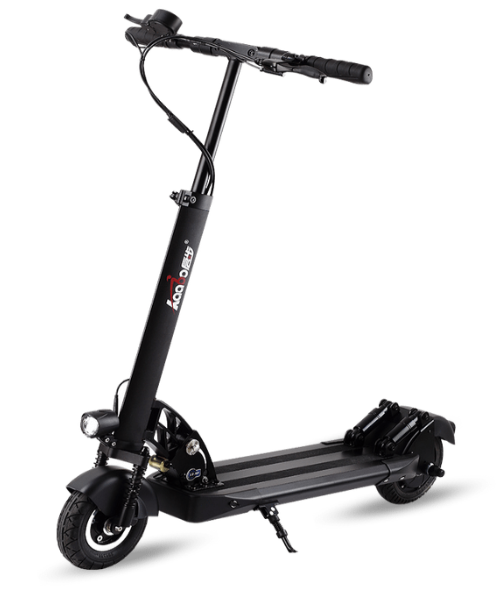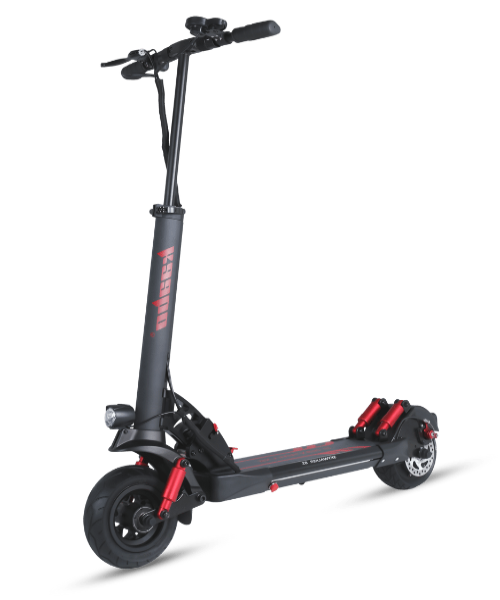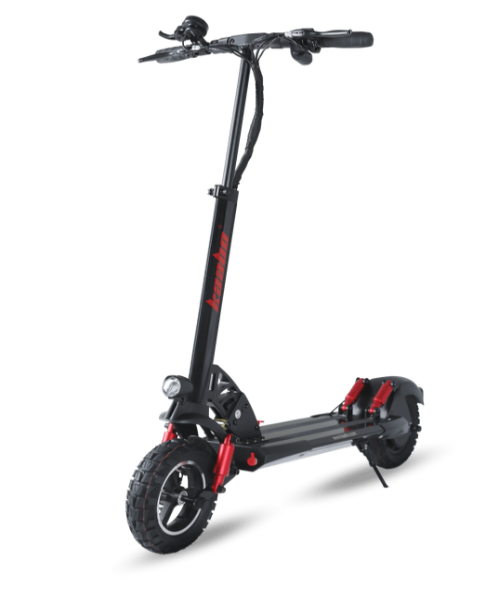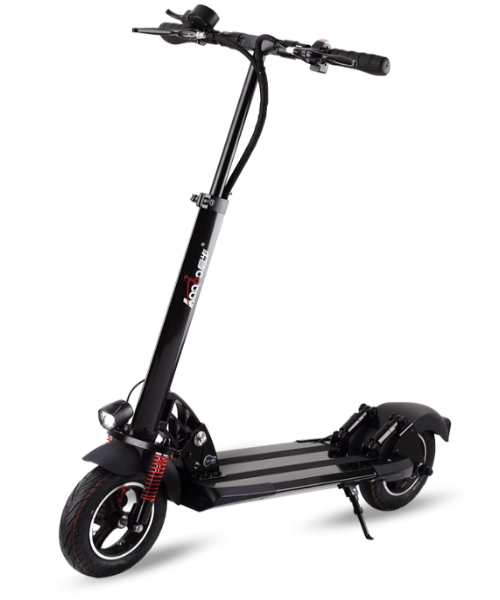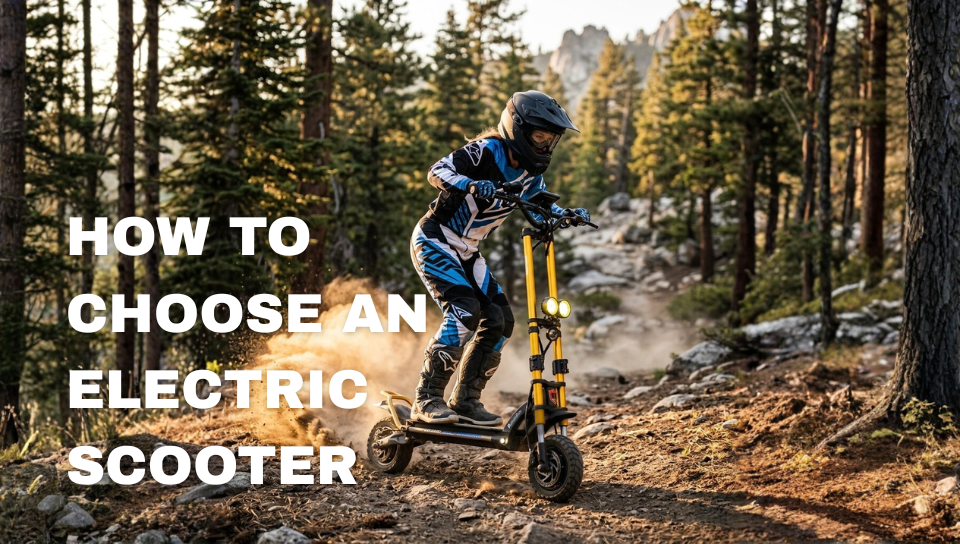
Buying the wrong electric scooter is an expensive mistake. Too little power and you struggle on hills. Too heavy and you can’t carry it. Too cheap and the battery loses range within a year. This electric scooter buying guide cuts through the noise and tells you exactly what to look for before you spend a penny.
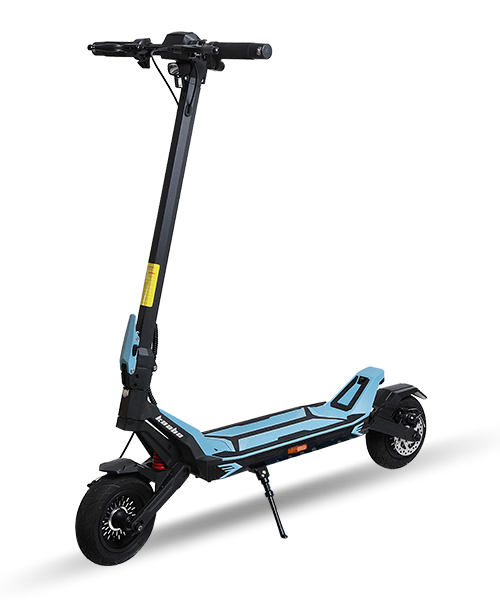
The market spans everything from 250W folding commuters to 13,000W+ trail machines. Each rider needs something different. A city commuter and an off-road trail rider have almost nothing in common in terms of what their scooter needs to do. So rather than listing every product available, this guide explains the specs that matter — and shows how they apply to real buying decisions.
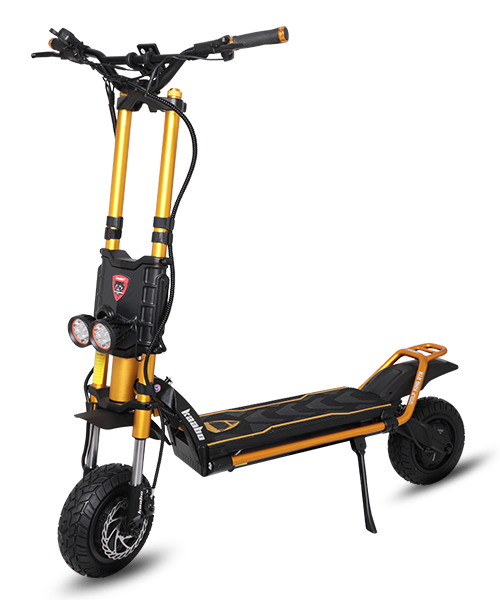
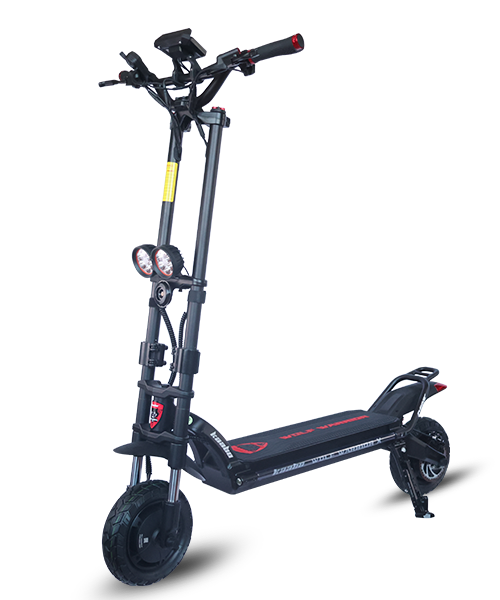
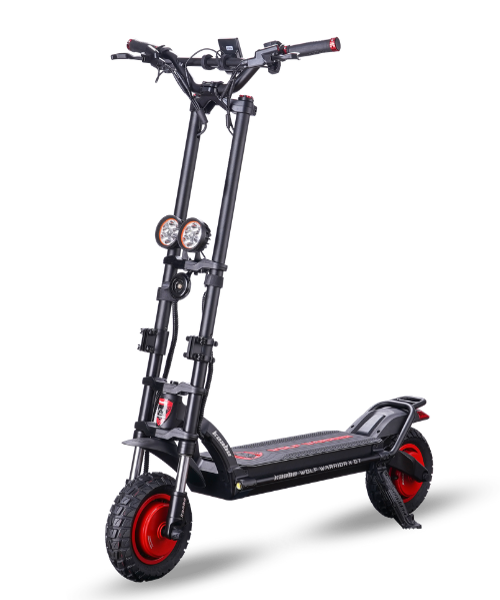
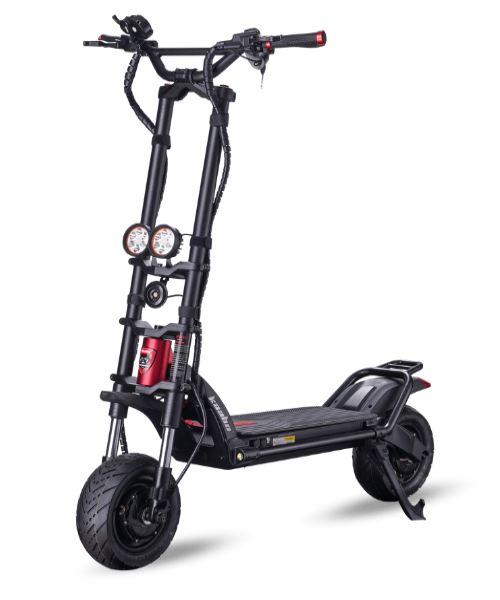
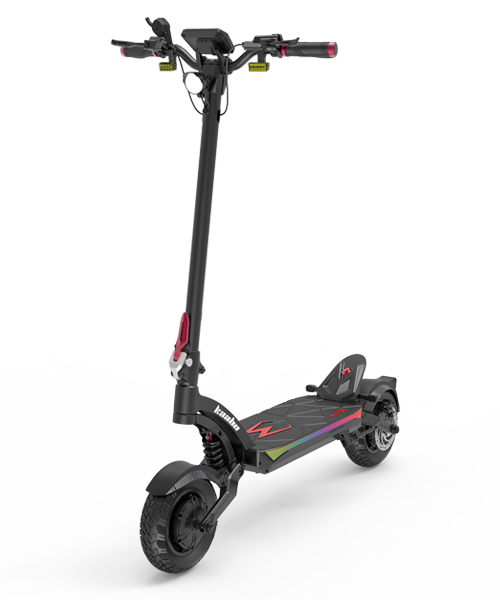
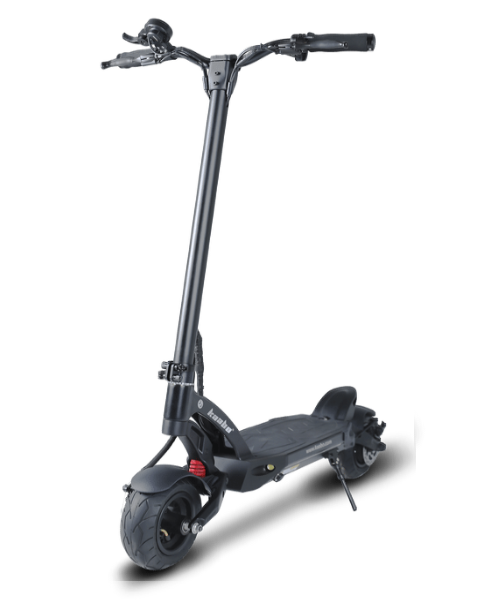
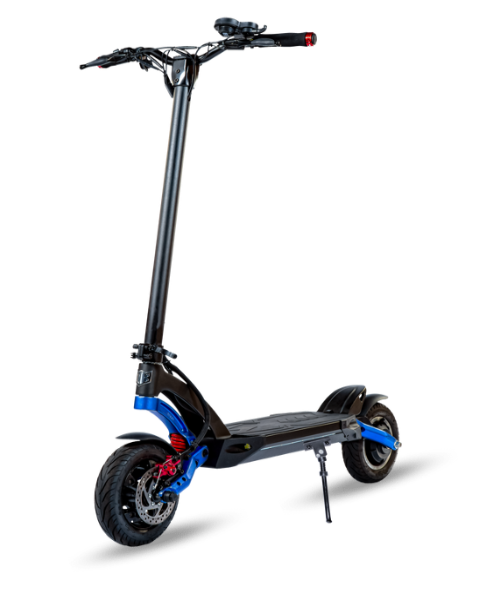
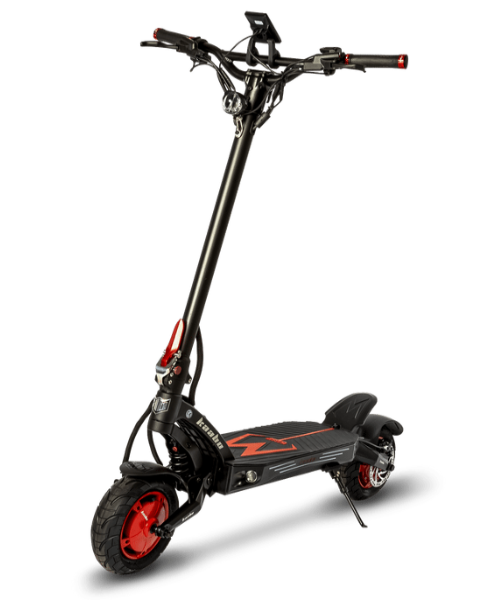
We’ll use the Kaabo Wolf Warrior X Max as a reference point throughout. It sits in the mid-performance segment — dual 1100W motors, 60V 27Ah battery, 38 kg — and it illustrates most of the buying decisions clearly. Where relevant, we also compare it to similar platforms so you can see the trade-offs in action.
Quick Answer: A good electric scooter buying guide covers six core factors: motor power, battery capacity and real range, suspension type, braking system, frame material, and weight. For city riders, 500–1500W total and 20–40 km real range is usually enough. For mixed terrain or off-road use, look for dual motors above 2000W combined, hydraulic disc brakes with EABS, and pneumatic tyres above 10 inches.
Electric Scooter Buying Guide: The Six Specs That Actually Matter
Most buying guides focus on top speed. Speed is easy to measure and easy to market. But top speed rarely determines whether a scooter fits your life. Battery range, weight, and suspension quality affect every single ride. Speed is relevant only a fraction of the time.
So before you compare models, understand these six factors — because they define whether a scooter works for your specific use case.
1. Motor Power
Motor power tells you how hard the scooter can push. It’s measured in watts (W). Single-motor scooters run one motor at the rear wheel. Dual-motor scooters run one at each wheel, giving more torque and better traction. The Wolf Warrior X Max runs dual 1100W motors, peaking at 4032W combined. That’s enough for 35-degree hill climbs and fast urban acceleration — without being overwhelming for a new rider.
For flat city commuting, 500–1000W is enough. For hills above 15 degrees or heavier riders. Go dual-motor at 2000W+ total. For serious off-road, look for 3000W+ combined output.
2. Battery Capacity and Real Range
Battery size is measured in watt-hours (Wh). Bigger Wh = more range. But manufacturers state “optimal” range — a lighter rider at low speed on flat ground. Real-world range is typically 55–65% of the optimal figure. The Wolf Warrior X Max carries a 60V 27Ah battery using DMEGC 21700 cells. Its stated range is 90 km. So plan for around 50–60 km in actual use.
Also check charge time. The X Max takes 7.8 hours with standard chargers, or 2.7 hours with fast 5A chargers. If you ride daily, charging speed matters as much as range.
3. Suspension Type
Suspension absorbs bumps. Poor suspension turns every crack in the road into a jolt through your legs and hands. There are three common types. Spring suspension is the cheapest and least effective. Hydraulic suspension uses oil-filled dampers for smoother, more consistent absorption. Adjustable hydraulic suspension lets you tune stiffness for different surfaces.
The Wolf Warrior X Max uses a patented front hydraulic suspension paired with a C-type rear spring shock. That front hydraulic unit keeps the front wheel planted on rough ground. The rear spring absorbs bigger impacts from bumps and drops. Most competitors at this price point use fixed spring suspension at both ends.
4. Braking System
Brakes save lives. Cable disc brakes are the cheapest option and work reasonably well when new. But cable tension loosens over time, and braking force drops in wet conditions. Hydraulic disc brakes use fluid pressure instead. They grip harder, respond faster, and stay consistent in rain. EABS (Electronic Anti-lock Braking System) adds motor-level braking before the mechanical calipers engage. This prevents wheel lockup on loose surfaces.
The X Max runs 140mm hydraulic disc brakes front and rear with EABS. For a scooter that hits 70 km/h, that’s the minimum appropriate setup.
5. Frame Material
Frame material determines strength, weight, and long-term durability. The Wolf Warrior X Max uses four different aluminium grades across its frame — 6061-T6 for the handle and stem, 6082-T6 for the frame connections and swing arm, 6063-T6 for the deck, and ADC12 aluminium alloy for the electrical control box. Each grade matches the load it carries. That level of material specification is rare at this price point and contributes directly to the X Max’s 38 kg weight despite its dual-motor drivetrain.
Cheaper scooters often use a single generic aluminium grade throughout, or mix aluminium with lower-grade steel components. Both add weight or reduce rigidity over time.
6. Weight and Portability
Weight affects every moment you’re not riding. Carrying a scooter up stairs, loading it into a car, or storing it in a tight space all get harder as weight increases. At 38 kg, the Wolf Warrior X Max sits at the upper limit of what most riders manage solo. If you need to carry your scooter regularly, look for machines under 30 kg. If you ride and store in one location, weight matters less.
How to Use This Electric Scooter Buying Guide by Rider Type
Different riders need different machines. This section maps the six factors above to specific rider profiles so you can apply them directly to your buying decision.
| Rider Profile |
Motor Power |
Battery Target |
Suspension |
Brakes |
Weight Limit |
| City commuter (flat roads) |
500–1000W single |
400–600 Wh |
Spring or basic hydraulic |
Cable disc or hydraulic |
Under 20 kg |
| Mixed terrain (urban + trails) |
1500–2500W dual |
700–1000 Wh |
Hydraulic both ends |
Hydraulic + EABS |
Under 40 kg |
| Heavy rider (above 90 kg) |
2000W+ dual |
800 Wh+ |
Adjustable hydraulic |
Hydraulic + EABS |
N/A |
| Off-road / trail rider |
3000W+ dual |
1200 Wh+ |
Adjustable dual-arm |
4-piston hydraulic + EABS |
Under 70 kg |
| Performance / speed rider |
4000W+ dual |
2000 Wh+ |
Motorcycle-grade |
4-piston hydraulic + EABS |
Under 70 kg |
The Wolf Warrior X Max fits the mixed-terrain profile clearly. Its 4032W peak, adjustable hydraulic front suspension, and 140mm hydraulic brakes cover urban commuting and light trail riding without the weight or complexity of a dedicated off-road platform. It’s also rated to 120 kg maximum load, which suits most adult riders comfortably.
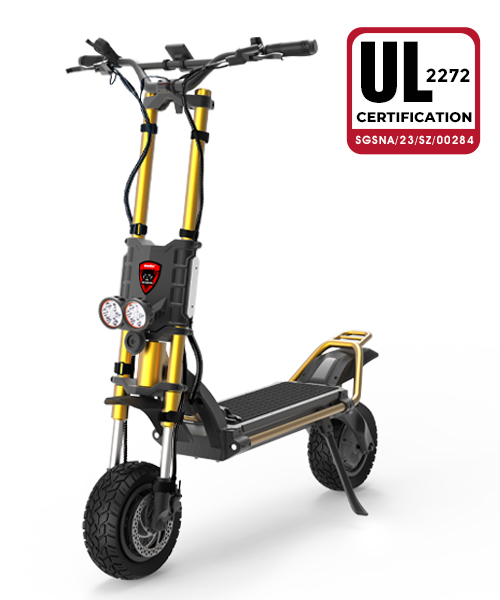
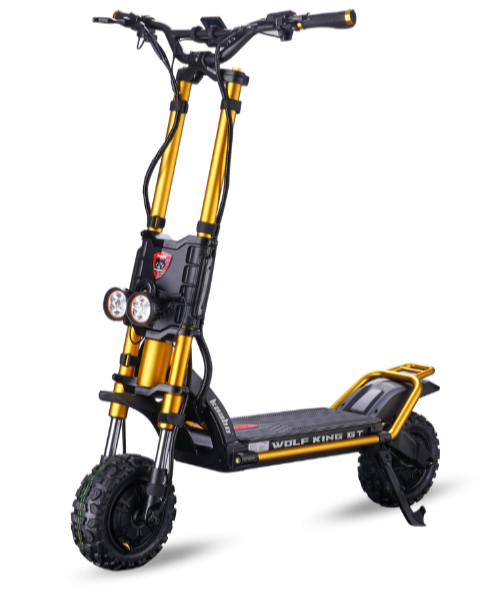
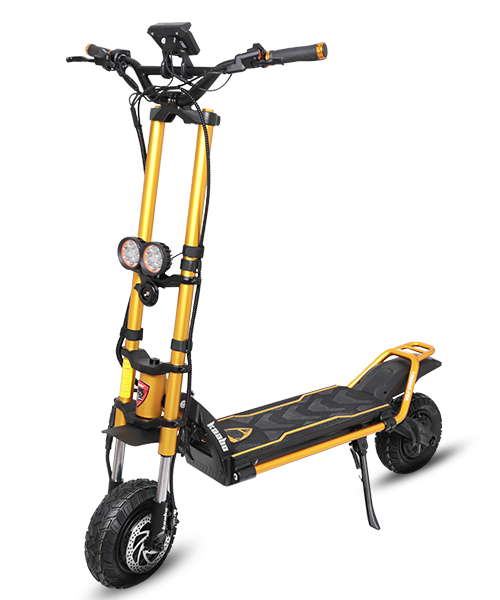
For riders who need more — steeper terrain, longer range, or higher top speed — the Wolf King GTR Max steps up to 13,440W peak, a 2845 Wh battery with 200 km optimal range, and 4-piston hydraulic brakes. That’s a significant jump in cost and weight (67 kg), but it’s the right tool for serious trail or performance riding.
Battery and Charging: What the Numbers Mean in Practice
Battery specs cause more confusion than any other part of the electric scooter buying guide process. Here’s how to read them clearly.
Voltage (V) measures electrical pressure. Higher voltage means more power at the same current draw. The Wolf Warrior X Max runs a 60V system. Budget scooters often use 36V or 48V. Higher voltage supports faster, more efficient power delivery to the motors.
Capacity (Ah) measures how much charge the battery holds. Combined with voltage, it gives you watt-hours: 60V × 27Ah = 1620 Wh. That’s the actual energy stored. More watt-hours means more range per charge.
Cell Quality Matters as Much as Capacity
The X Max uses DMEGC 21700 cells. DMEGC is a Chinese lithium-ion manufacturer that produces cells for both EV and personal mobility applications. The 21700 format holds roughly 50% more energy per cell than the older 18650 standard. That’s why manufacturers can hit 27Ah in a lighter, smaller pack than 18650-based alternatives. According to Battery University’s lithium-ion cell comparison data, cell quality directly affects how fast capacity fades over charge cycles — so brand-name or rated cells outlast unbranded equivalents significantly over a two-to-three year ownership period.
Charging Speed and Daily Use
If you commute daily on a scooter, charge time affects your schedule. The X Max’s 7.8-hour standard charge works fine overnight. But the 2.7-hour fast charge option (with separate 5A chargers) adds real flexibility — especially for riders who ride morning and evening or need a top-up during the day.
Safety Features to Check Before You Buy
Safety is the part of the electric scooter buying guide that most articles skip over quickly. But the difference between a safe and unsafe machine is measurable — and it shows up in specific components.
IP (Ingress Protection) rating tells you how well the scooter handles water and dust. IPX5 means it withstands water jets from any direction. The X Max carries an IPX5 rating on the scooter body and an IPX7 rating on the display (IPX7 means it survives temporary submersion up to 1 metre). For year-round riding in wet climates, IPX5 is the minimum you should accept.
Charging port protection is often overlooked. The Wolf Warrior X Max uses an auto-flip waterproof charging port — a physical cover that flips closed automatically when not in use. This prevents water from entering the port during rides in wet conditions. Most cheaper scooters use simple rubber plug covers that riders frequently lose or forget to replace.
Lighting system affects both visibility and legal compliance. The X Max runs RGB LED foot deck lights (phone-controlled), a front spotlight, turn signals, and standard headlights. That lighting setup meets road visibility requirements in most jurisdictions and adds active turn-signal functionality that basic LED setups don’t include.
Frequently Asked Questions
What should I look for in an electric scooter buying guide?
A good electric scooter buying guide covers motor power, battery watt-hours, suspension type, braking system, frame material, and weight. Match each factor to your riding profile — city, mixed terrain, or off-road. Also check IP water resistance rating, charging speed, and maximum load. These factors affect daily usability more than top speed does.
How much motor power do I need for an electric scooter?
For flat city commuting, 500–1000W is enough. For hills above 15 degrees or riders above 90 kg, look for dual motors producing at least 2000W combined. The Wolf Warrior X Max runs dual 1100W motors peaking at 4032W — a good balance for mixed urban and light trail use. Pure off-road riding needs 3000W+ combined from this electric scooter buying guide perspective.
What is real-world electric scooter range vs stated range?
Real-world range is typically 55–65% of the manufacturer’s stated optimal range. The Wolf Warrior X Max states 90 km under optimal conditions — so plan for 50–60 km in actual commuting use. Optimal range assumes a 75 kg rider at 25 km/h on flat ground. Heavier riders, higher speeds, and hilly terrain all reduce range further.
Are hydraulic brakes worth it on an electric scooter?
Yes, especially above 40 km/h. Hydraulic disc brakes use fluid pressure to engage the caliper — producing stronger, more consistent stopping force than cable disc systems. They also degrade less in wet conditions. Combined with EABS electronic braking, as on the Wolf Warrior X Max, the system prevents wheel lockup on loose surfaces. For any scooter used above 40 km/h, hydraulic brakes are worth the cost.
What IP rating should an electric scooter have?
Look for IPX5 as a minimum for any scooter used year-round. IPX5 means the scooter handles water jets from any direction — covering rain and road spray. The Wolf Warrior X Max carries IPX5 on the body and IPX7 on the display. Budget scooters often carry IPX4 (splash resistance only) or no rating at all, which creates risk in wet riding conditions.
How heavy should my electric scooter be?
Target weight depends on how often you carry the scooter. Under 20 kg suits riders who carry the scooter upstairs or on public transport regularly. 20–40 kg suits riders who store it at ground level and only lift it occasionally. The Wolf Warrior X Max weighs 38 kg — manageable for most adults in a ground-level storage situation, but not suited to frequent stair or transport carrying.
Use This Buying Guide to Choose With Confidence
The right electric scooter fits your terrain, your body, your schedule, and your storage situation. Use the six-factor framework from this electric scooter buying guide — motor power, battery, suspension, brakes, frame material, and weight — and apply it to your specific needs before looking at brand names or marketing claims.
For riders in the mixed-terrain segment, the Wolf Warrior X Max hits a strong balance point. Its 4032W peak, patented front hydraulic suspension, DMEGC 21700 battery, RGB lighting, NFC display, and 38 kg frame cover daily commuting and light trail use without the cost or weight of a performance platform.
If your needs push toward serious off-road or maximum performance, explore the full Kaabo electric scooter range — including the Wolf King GTR Max for riders who want the top of what production scooters deliver. Match the machine to the ride. Everything else follows from that.
 Español
 French