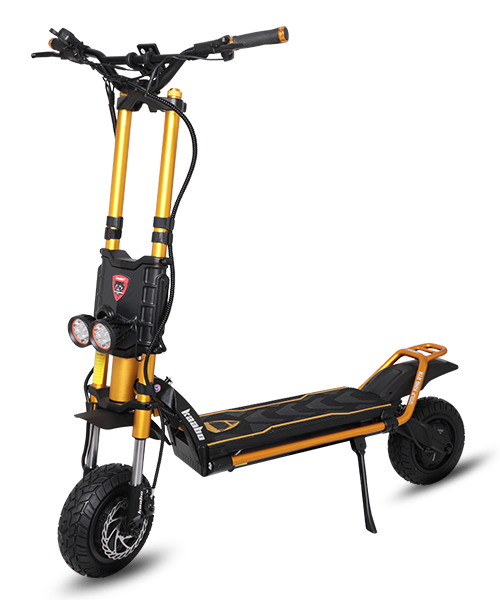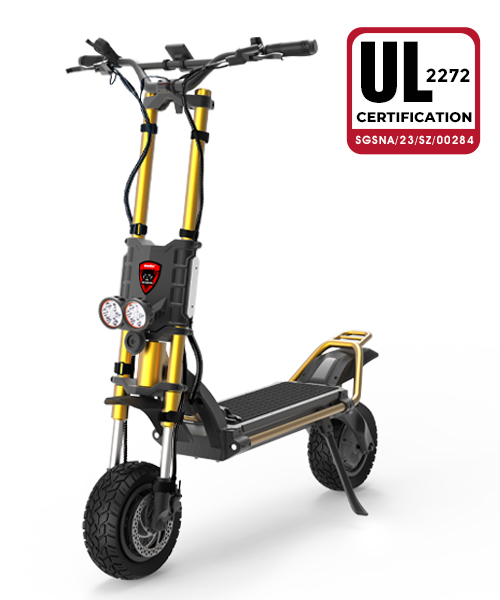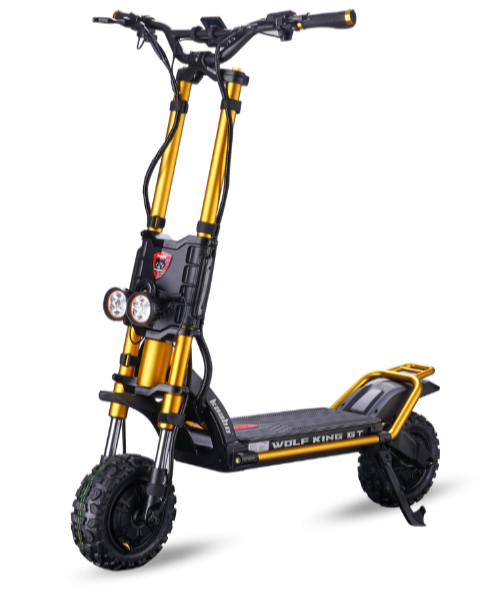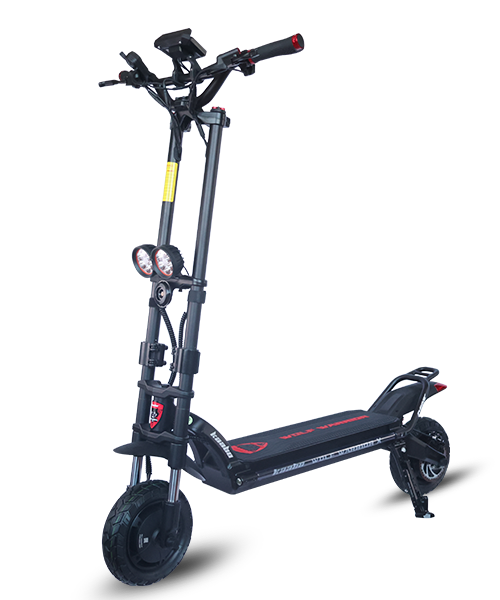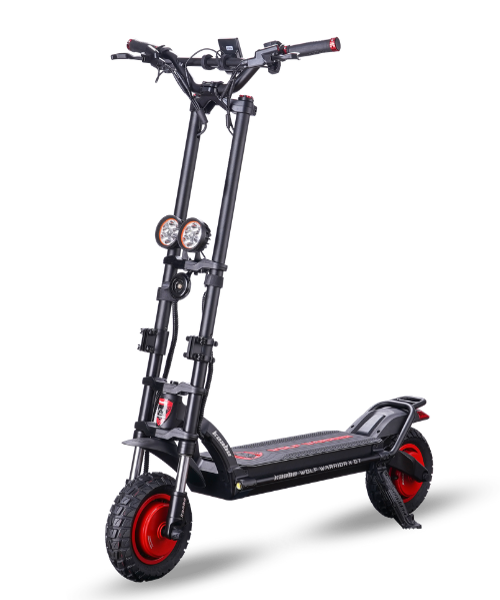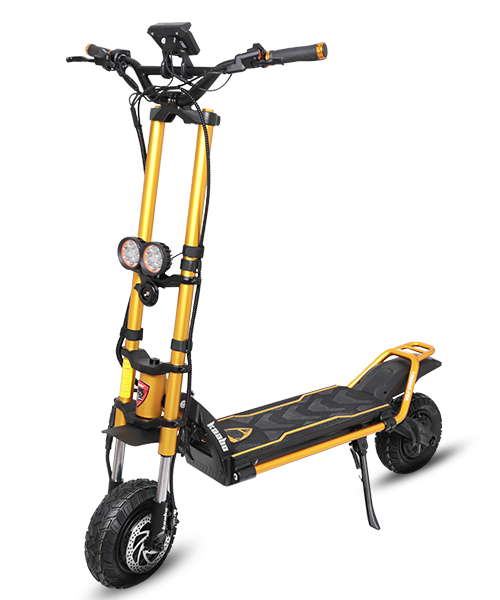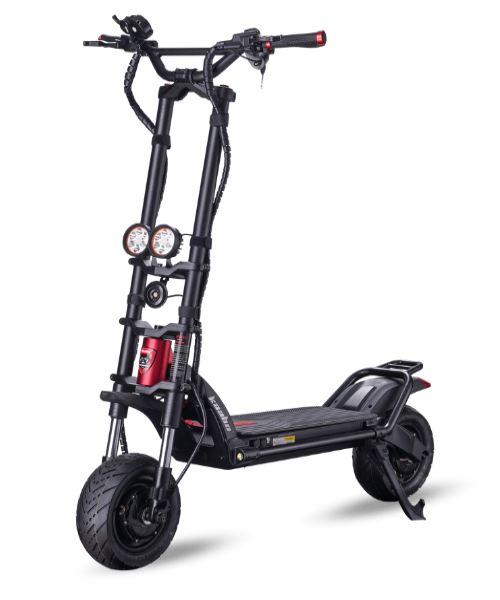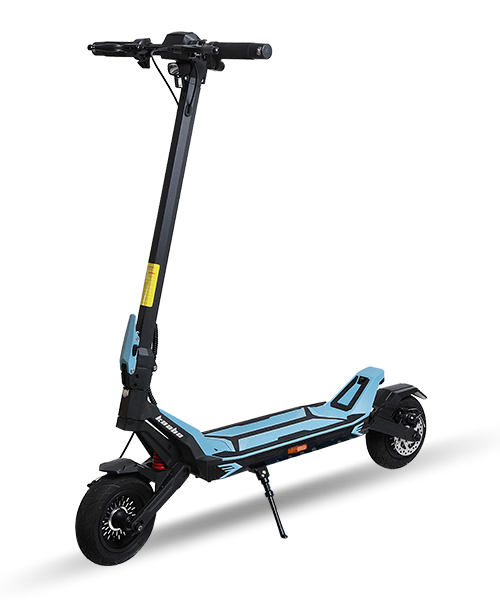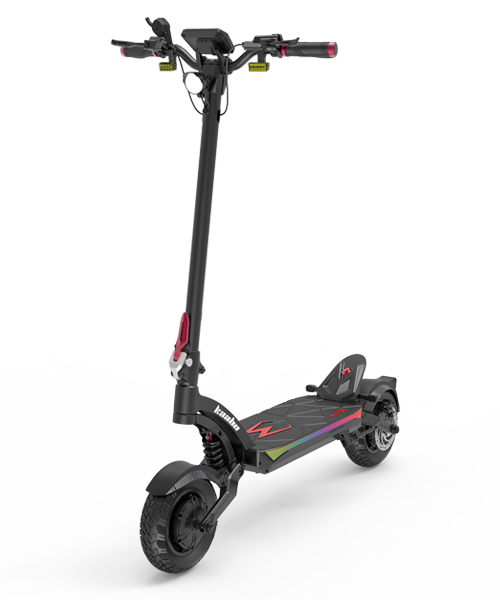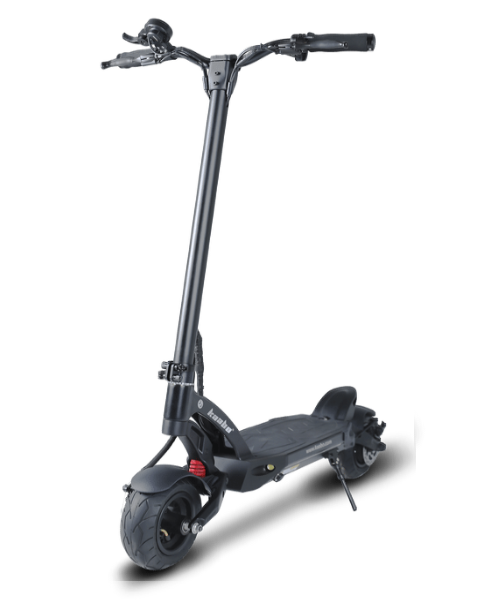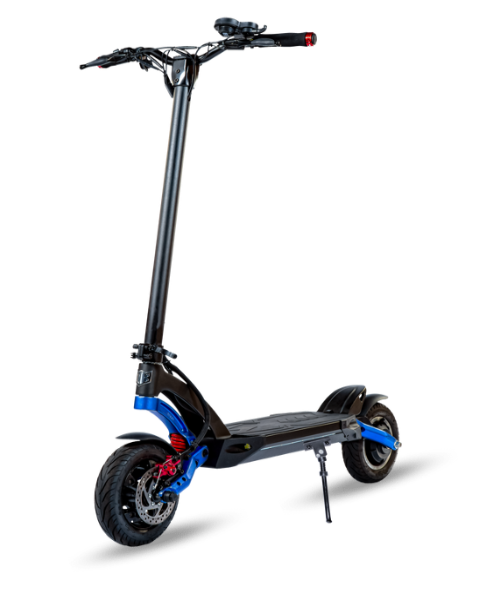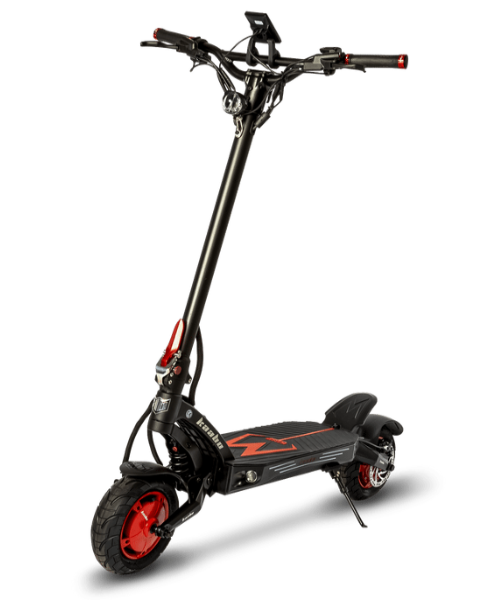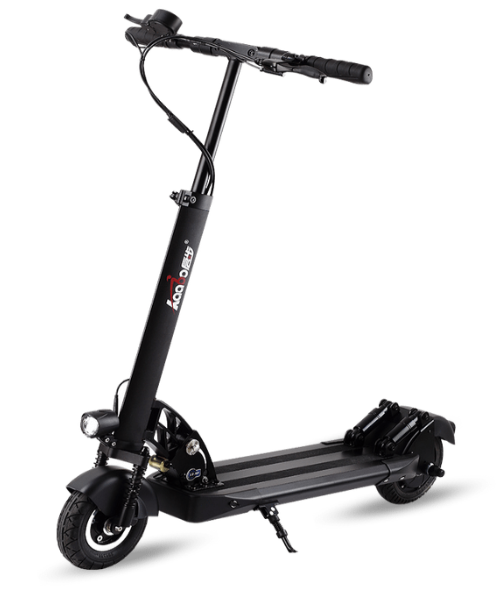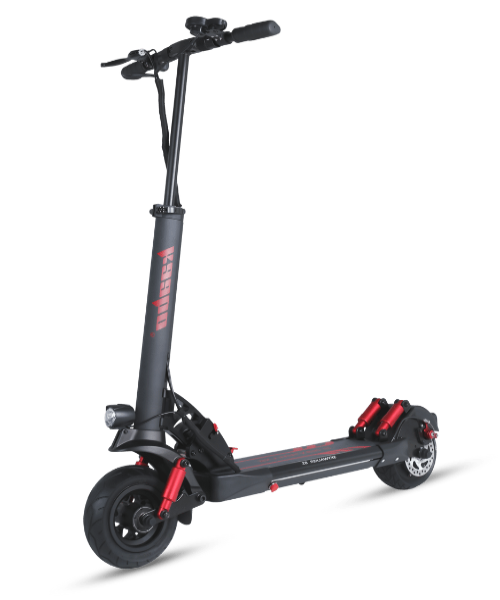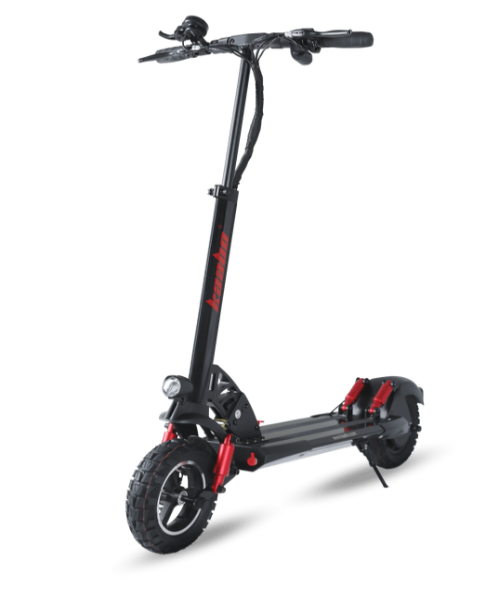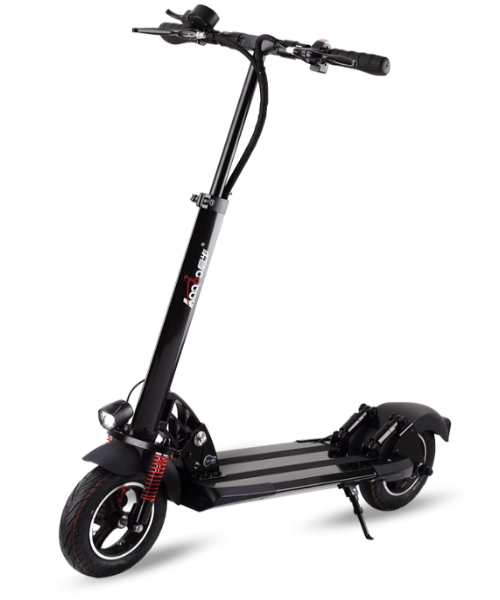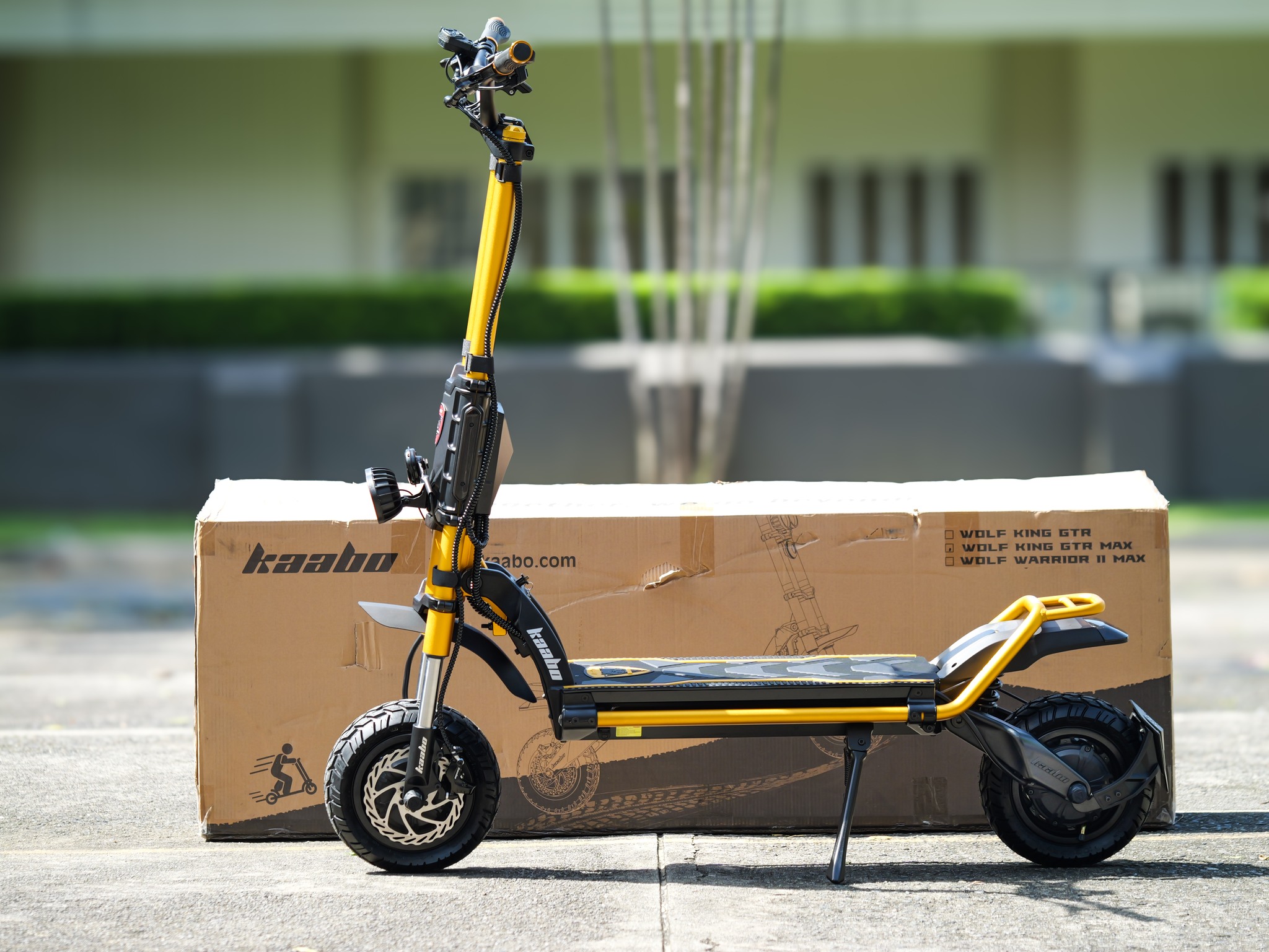
Serious offroad e scooters don’t cut corners. They’re built for loose terrain, steep hills, and surfaces that destroy road scooters fast. The gap between a true off-road machine and a commuter isn’t small. It shows up in motor torque, suspension depth, tyre build, frame strength, and braking response — all at once, every time the trail gets rough.
The Wolf King GTR Max hits 105 km/h, reaches 50 km/h in just 3.5 seconds, and peaks at 13,440W from dual 2000W separable motors. That puts it at the top of what production off-road scooters currently offer. But the fastest machine isn’t always the right one. The right choice depends on your trail type, your weight, and how you plan to ride.
This guide covers what off-road e-scooter performance actually requires, compares the Wolf King GTR Max to close competitors, and helps you match the right platform to your terrain.
Quick Answer: The best offroad e scooters combine dual motors above 1500W each, hydraulic disc brakes with EABS, at least 11-inch pneumatic or vacuum tyres, adjustable suspension, and frames made from 6061-T6 or 6082-T6 aluminium alloy. The Kaabo Wolf King GTR Max leads the production segment with 13,440W peak power, self-healing CST 100/55-7 vacuum tyres, and an 18-level adjustable rear suspension.
What a True Off-Road E-Scooter Actually Needs
A real off-road e-scooter handles terrain that breaks standard urban machines. Loose gravel, wet roots, steep dirt climbs, and rocky descents all test different systems at once. Most scooters marketed as “off-road capable” handle one or two of those challenges. Purpose-built off-road platforms handle all of them.
Four systems define genuine trail performance: motor torque, tyre build, suspension depth, and brake coordination. None works well without the others. High torque without traction control causes wheelspin on loose ground. Wide treads without proper suspension send every root impact straight to the rider. And hydraulic brakes without EABS lock the wheels on loose surfaces — making stops longer, not shorter.
Motor Torque vs Rated Power
Rated power (watts) shows how much electricity the motor uses. Torque (Newton-metres) shows how hard it pushes the wheel. Torque is what actually pulls a scooter up a 45-degree slope under a 100 kg rider. Top-tier dual-motor scooters typically produce 50–80 N·m at the wheel. The Wolf King GTR Max’s 13,440W peak from its dual motors puts it at the top of that range.
Suspension Travel and Adjustment
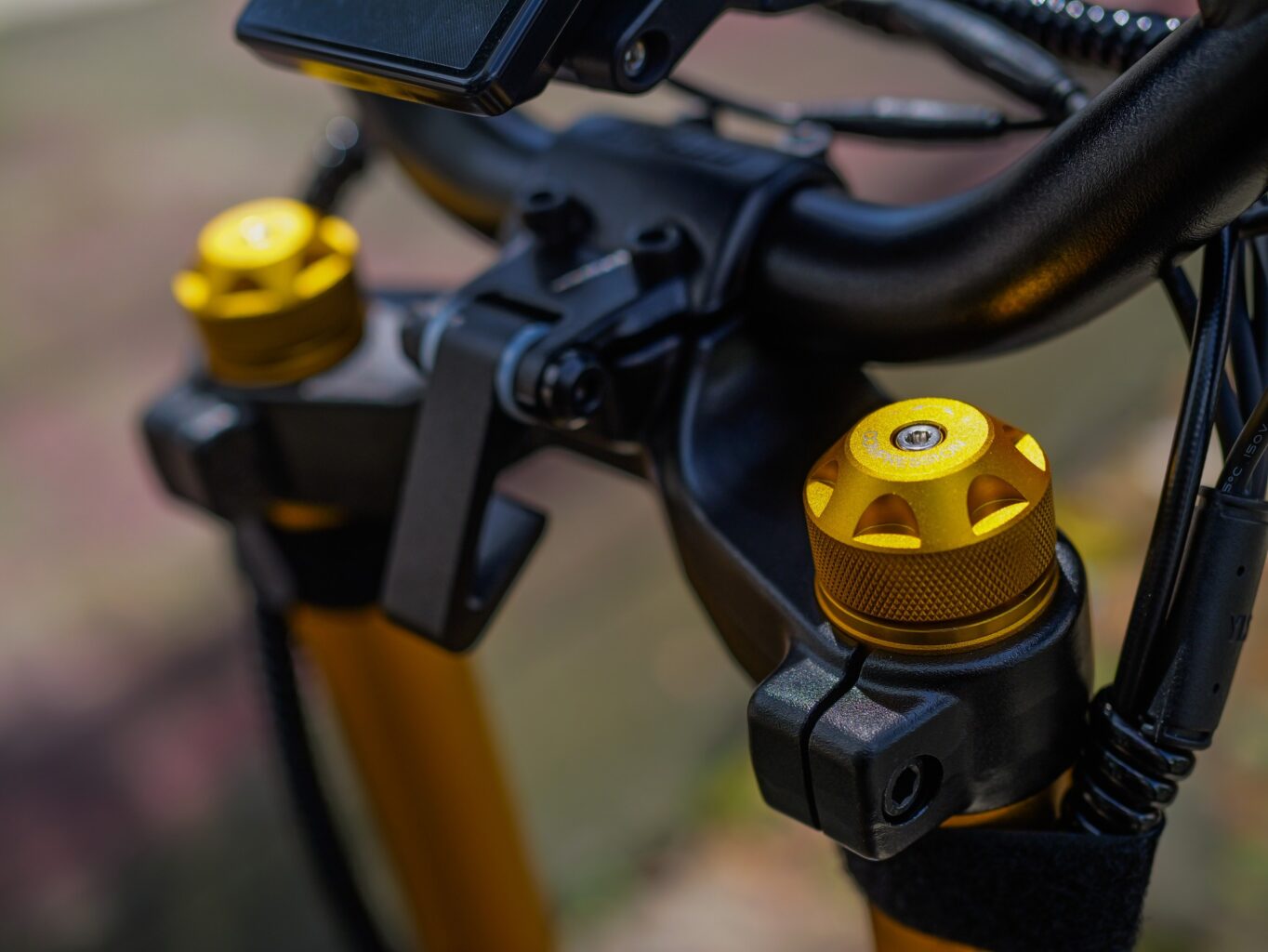
Suspension travel is simply how far the suspension compresses before it bottoms out. More travel means bigger obstacles get absorbed before the frame feels the hit. Standard commuter scooters offer 40–60mm of travel. Off-road machines need 80–120mm. The Wolf King GTR Max’s adjustable dual-arm front suspension also gained extra height in its latest update — increasing from 10mm to 12mm base height. That change improves both ground clearance and bump absorption together.
Top Off-Road E-Scooters Compared: Wolf King GTR Max vs the Field
The performance off-road segment above 3000W combined output has a small but serious group of machines. The comparison below focuses on platforms that genuinely compete with the Wolf King GTR Max on terrain capability — not entry-level or mid-range alternatives.
| Specification |
Kaabo Wolf King GTR Max |
Segway GT2 Super |
Apollo Phantom V3 |
Ninebot P100S |
| Rated Motor Power |
2000W × 2 |
3000W × 2 |
2000W × 2 |
1000W × 2 |
| Peak Power |
13,440W |
~9,000W |
~8,000W |
~4,000W |
| Top Speed |
105 km/h |
70 km/h |
70 km/h |
65 km/h |
| 0–50 km/h |
3.5 seconds |
~4.5 sec |
~5 sec |
~7 sec |
| Battery Capacity |
2845 Wh |
~1890 Wh |
~1554 Wh |
~1417 Wh |
| Optimal Range |
200 km |
70 km |
60 km |
100 km |
| Front Suspension |
Adjustable dual-arm, motorcycle grade |
Dual hydraulic |
Dual air |
Dual spring |
| Rear Suspension |
18-level adjustable oil spring |
Dual hydraulic |
Adjustable spring |
Spring |
| Brakes |
Hydraulic 160mm + EABS + 4-piston |
Hydraulic + NFC |
Hydraulic disc |
Cable disc |
| Tyres |
100/55-7 self-healing CST vacuum |
11″ pneumatic |
11″ pneumatic |
10″ pneumatic |
| Controller |
72V 100A 2-in-1 FOC (Kaabo) |
Dual controller |
Dual controller |
Dual controller |
| IP Rating |
IPX5 |
IPX5 |
IPX4 |
IPX5 |
| Weight |
67 kg |
96.3 kg |
54 kg |
68 kg |
| Drive Mode |
Single/dual motor switchable |
Dual only |
Dual only |
Dual only |
Three things clearly separate the Wolf King GTR Max from the others. First, the 2845 Wh battery — using Samsung INR21700-50GB and LG INR21700-M50 cells — holds 50–100% more energy than competing platforms. Second, the switchable single/dual motor mode stretches range on easier sections. Third, the 4-piston hydraulic brake calipers grip the rotor from both sides evenly — something 2-piston units can’t match at this speed.
Wolf King GTR Max: Built for the Hardest Trails
The Wolf King GTR Max follows a clear engineering idea: don’t limit performance to stay safe on paper. Its 72V 100A 2-in-1 FOC controller — developed entirely by Kaabo — manages both motors through one double-layer unit. FOC stands for Field-Oriented Control. In simple terms, it’s a smarter way to manage motor power — it reads the motor’s magnetic state in real time and adjusts current precisely. The result is smoother power, less heat, and faster response than older control methods. Most rivals still run two separate controllers, one per motor.
Because of the 2-in-1 setup, the GTR Max supports five ride modes. Sport mode pushes full output. ESP (Electronic Stability) mode applies correction to both motors when sensors detect a loss of grip — which is especially useful on loose trail surfaces. Pedestrian mode limits speed for shared spaces. Anti-theft mode locks the scooter electronically. And Gears Memory holds your last-used power setting at startup, so you don’t have to reconfigure each time.
Self-Healing CST Tyres: What They Do and Why It Matters
The Wolf King GTR Max runs 100/55-7 self-healing CST vacuum tyres, developed directly with CST (Cheng Shin Rubber Co.) — one of the world’s largest tyre makers by volume, according to Tire Business global tyre market data. The sizing breaks down simply: 100mm wide tread, 55% sidewall height ratio, on a 7-inch rim. That wider footprint provides more grip during cornering on loose ground than standard 11-inch tubeless alternatives.
The self-healing layer inside the tyre casing fills punctures up to around 6mm across — automatically, without stopping. At 105 km/h on rocky terrain, a sudden flat is dangerous. The gel layer handles the most common off-road puncture scenario without any rider action required.
Removable Battery with Full Protection
The 2845 Wh aluminium-cased battery seals internally for water resistance and includes a built-in carry handle. That handle matters — it makes removing and reinserting the battery practical rather than a frustrating task. Moreover, the battery management system covers six protection layers: overcharge, over-discharge, short circuit, overcurrent, low temperature, and high temperature. According to Battery University’s documentation on lithium-ion protection circuits, this six-layer approach is standard practice on high-discharge 21700 cell packs designed for demanding applications.
Fast charging with dual 5A chargers (sold separately) takes around 4 hours. Standard 2A dual charging takes approximately 10 hours.
Matching Your Off-Road E-Scooter to Your Trail Type
Not all off-road terrain puts the same load on a scooter. A forest path with packed soil and gentle slopes demands far less than a rocky mountain descent with loose gravel and steep drops. So matching the machine to the trail prevents both poor performance and unnecessary cost.
Compact trail and gravel riding — gradients under 25 degrees, firm surfaces — suits mid-tier offroad e scooters in the 2000–4000W combined output range. Machines like the Kaabo Warrior 11 Pro+ cover this well without the weight or charging commitment of a flagship platform.
Aggressive mixed terrain — loose surfaces, steep inclines, high-speed descents — needs the suspension depth, torque output, and braking control that only flagship platforms provide. The Wolf King GTR Max’s 18-level adjustable rear suspension, 4-piston hydraulic brakes, and dual-arm motorcycle-grade front forks are minimum-appropriate engineering for that use case.
Weight and Trail Transport
At 67 kg, the Wolf King GTR Max needs a van or cargo vehicle with a loading ramp for trail transport. A standard car boot won’t work safely. Most serious off-road riders already use cargo vehicles for this purpose. Plan that logistics before buying any machine in this weight class.
Trail access rules also vary widely by region. In most EU countries, motorised vehicles need specific permission on public trails. In the US, some designated OHV (Off-Highway Vehicle) areas allow electric off-road vehicles. For full details, check the US Bureau of Land Management OHV use policies before planning trail sessions.
Frequently Asked Questions
What makes an e-scooter suitable for off-road riding?
True offroad e scooters need dual motors above 1500W each, hydraulic brakes with EABS, tyres of at least 11 inches, adjustable suspension with 80mm or more of travel, and a forged aluminium frame. Without all of these working together, performance on loose terrain drops quickly. High speed on rough ground with weak suspension or cable brakes creates a real safety risk.
How fast can the Kaabo Wolf King GTR Max go?
The Kaabo Wolf King GTR Max reaches 105 km/h under optimal conditions — full charge, 75 kg rider, flat surface. It hits 50 km/h in 3.5 seconds, powered by dual 2000W separable brushless motors peaking at 13,440W combined. On actual trail terrain, real speeds run much lower due to surface resistance and safe riding margins.
How far can off-road e-scooters travel on one charge?
Range on offroad e scooters depends on speed, terrain, and rider weight. The Wolf King GTR Max offers 200 km under optimal conditions from its 2845 Wh battery. In real-world off-road use at mixed speeds, expect 80–120 km. Switching to single-motor mode extends range further on easier sections. Most competitors in this class provide 60–100 km real-world range.
Are off-road e-scooters legal to ride on trails?
Trail legality for offroad e scooters varies by country and land authority. In the EU, motorised vehicles need authorisation on public trails under national land-use law. In the US, designated OHV areas managed by the Bureau of Land Management may permit qualifying electric off-road vehicles. Private land with owner permission remains the simplest legal option in most places.
What tyre size works best for off-road e-scooter riding?
11-inch pneumatic or vacuum tyres are the standard for serious offroad e scooters. The Wolf King GTR Max uses 100/55-7 vacuum tyres — 100mm wide on a 7-inch rim. That wider tread gives more lateral grip during cornering on loose ground compared to standard 11-inch tubeless alternatives. The self-healing gel layer also handles punctures up to 6mm automatically, which matters most on rocky terrain.
How do 4-piston brakes differ from standard 2-piston hydraulic brakes?
A 4-piston hydraulic caliper grips the rotor from four pistons — two on each side. This spreads clamping force evenly, reduces rotor flex, and distributes heat across more surface area during hard stops. Standard 2-piston calipers apply force from one side only, causing uneven loading. For offroad e scooters above 80 km/h, 4-piston systems produce noticeably better and more consistent stopping power.
Pick the Right Off-Road E-Scooter and Ride It to Its Limits
The off-road e-scooter market now covers a wide enough range that mismatches are common. Budget machines end up on terrain they can’t handle. Flagship platforms go to riders who never push past trail speed. Both outcomes waste money and raise risk.
For riders who genuinely test terrain — steep gradients, loose surfaces, fast descents on mixed ground — the engineering gap between mid-tier and flagship offroad e scooters is real. The Wolf King GTR Max’s 13,440W peak, 4-piston hydraulic brakes, 18-level adjustable rear suspension, and 2845 Wh removable battery all solve real problems that trail riding creates. They’re not spec-sheet additions.
For riders who want to see the full range of what Kaabo builds before deciding, the Wolf King GTR Max product page includes complete specs, colour options, and a direct comparison with the standard Wolf King GTR. Choose the machine that fits your trail — then push it.
 Español
 French